
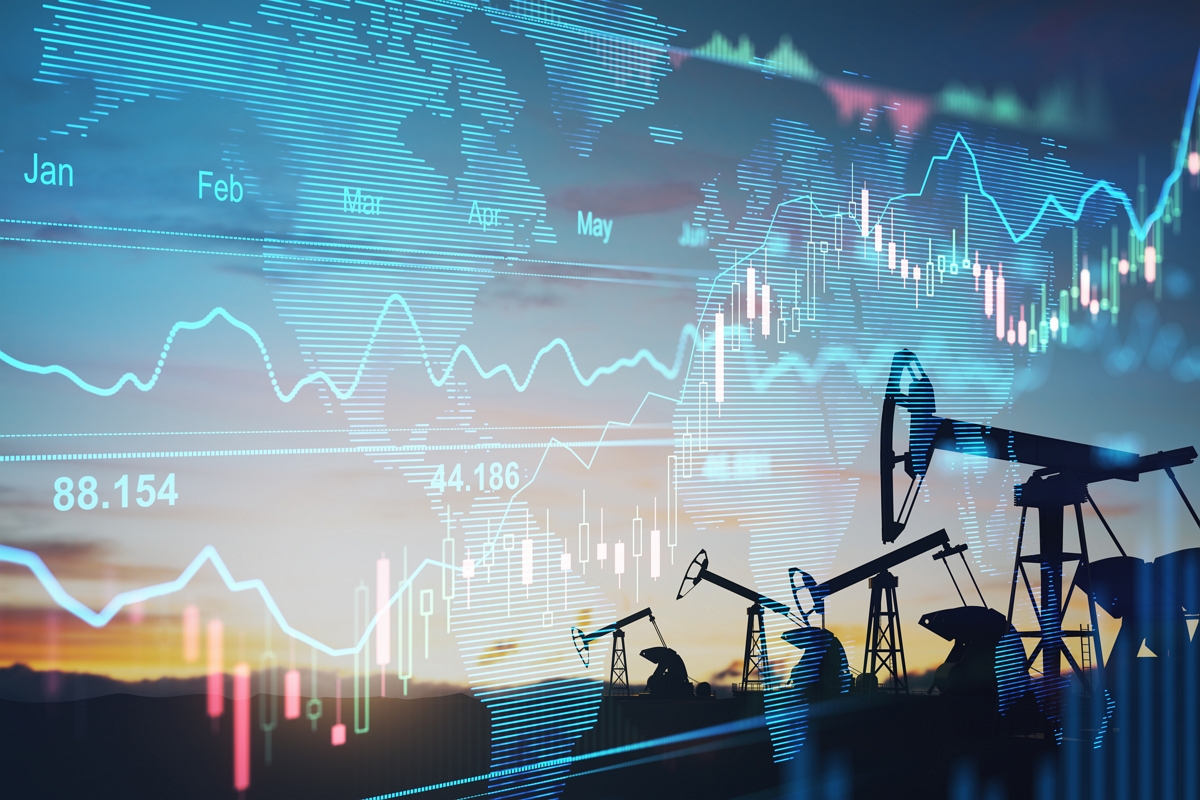
In today’s increasingly complex energy markets, midstream and energy companies face constant pressure to manage price volatility, regulatory requirements, logistics coordination, and operational risk.
To handle these challenges, many organizations rely on an ETRM platform; a specialized system designed to manage energy trading and risk across the entire value chain.
But what exactly does ETRM mean, how does it work, and why has it become so critical for modern energy businesses?
This guide breaks down the fundamentals of ETRM, explores its core capabilities, and explains how advanced ETRM solutions extend well beyond trading into full operational management.
#What Does ETRM Stand For?
ETRM stands for Energy Trading and Risk Management. An ETRM platform is a type of enterprise software that helps energy companies manage physical and financial trading activities while controlling exposure to market, credit, and operational risks.
Originally developed for trading desks, ETRM systems have evolved into comprehensive platforms that support everything from deal capture and pricing to logistics, scheduling, and settlement. Today, ETRM software is used by a wide range of organizations, including producers, marketers, refiners, utilities, and midstream operators.
#Why ETRM Matters for Midstream and Energy Companies
Energy markets are uniquely complex. Unlike many other commodities, energy products must be continuously transported, stored, balanced, and delivered; often in real time. Price volatility, regulatory compliance, and infrastructure constraints add further layers of risk.
An effective ETRM solution helps companies:
Gain visibility across trading and operations
Reduce financial and operational risk
Improve decision-making with real-time data
Ensure accurate settlements and reporting
Scale operations without losing control
For midstream companies in particular, ETRM platforms provide the structure needed to align commercial agreements with physical execution.
#Core Functions of an ETRM Platform
While capabilities vary across vendors, most ETRM systems share a common set of core functions that support trading, risk, and logistics.
Trade Capture and Lifecycle Management
At the heart of any ETRM platform is trade capture. This function records the details of physical and financial transactions, including pricing terms, volumes, delivery locations, and counterparties.
Once captured, ETRM software manages the entire trade lifecycle (from execution and scheduling to invoicing and settlement), ensuring consistency and auditability across the organization.
Risk Management and Exposure Analysis
Risk management is one of the primary reasons ETRM platforms exist. These systems help companies measure and control exposure to:
Market price fluctuations
Credit risk from counterparties
Volume and operational uncertainty
ETRM applications provide tools for mark-to-market valuation, value-at-risk (VaR) analysis, stress testing, and scenario modeling. This enables risk teams and traders to make informed decisions based on real-time market conditions.
Scheduling and Logistics Coordination
For physical energy markets, logistics are just as important as trading. Many modern ETRM platforms include scheduling functionality that aligns contracts with transportation assets such as pipelines, storage facilities, rail, or trucks.
This integration ensures that traded volumes can actually be delivered, reducing the risk of imbalances, penalties, or service disruptions.
Settlement, Invoicing, and Accounting Integration
Accurate settlement is essential for financial control and compliance. ETRM systems automate the calculation of invoices based on contract terms, actual deliveries, and market prices.
Most ETRM software integrates with accounting and ERP systems, ensuring that financial results flow seamlessly into general ledger, revenue recognition, and reporting processes.
Regulatory and Compliance Support
Energy markets are heavily regulated. ETRM applications help companies meet compliance requirements by maintaining audit trails, enforcing controls, and generating regulatory reports.
This reduces the risk of fines, reputational damage, and operational disruption.
#Types of ETRM Software and Deployment Models
Not all ETRM solutions are the same. Energy companies can choose from several deployment and architectural options depending on their needs.
On-Premise vs. Cloud-Based ETRM Platforms
Traditional ETRM systems were deployed on-premise, offering deep customization but requiring significant IT resources. Today, many ETRM platforms are cloud-based, providing:
Faster implementation
Lower infrastructure costs
Improved scalability and security
Cloud ETRM software is particularly attractive to mid-sized energy companies seeking flexibility without heavy capital investment.
Modular vs. End-to-End ETRM Solutions
Some ETRM companies offer modular systems that allow organizations to implement specific functionality (such as trading or risk) while others provide end-to-end platforms covering the full commercial and operational lifecycle.
Choosing the right approach depends on business complexity, growth plans, and integration requirements.
#Who Uses ETRM Platforms?
ETRM platforms are used by a broad range of participants across the energy value chain, including:
Oil and gas producers
Midstream pipeline and storage operators
Power and gas utilities
Energy marketers and traders
Renewables and alternative energy firms
As markets evolve, more ETRM companies are tailoring solutions to support multi-commodity portfolios and emerging energy sources.
#How ETRM Has Evolved Beyond Trading
While ETRM originally focused on trading desks, modern energy businesses require much more. Today’s ETRM solutions increasingly serve as operational hubs that connect commercial strategy with physical execution.
This shift is especially important for midstream companies, where success depends on efficiently managing assets, contracts, and logistics; not just trades.
#Choosing the Right ETRM Platform
Selecting an ETRM platform is a strategic decision. Energy companies should consider:
Commodity coverage and scalability
Integration with existing systems
Support for physical operations and logistics
Vendor experience and industry focus
The best ETRM solutions are those that grow with the business and support both current and future operational needs.
#Conclusion
An ETRM platform is no longer just a tool for traders; it is a critical system that connects risk management, trading, logistics, and operations across the energy enterprise. As markets become more dynamic and interconnected, the role of ETRM systems will only continue to expand.
For midstream and energy companies seeking greater visibility, control, and efficiency, modern ETRM solutions offer a powerful way to move beyond trading and into full operational excellence.